
Time and again, we must question the primacy of knowledge in our culture, and ask ourselves whether, in truth – in the words that open Aristotle’s *Metaphysics* – what human beings desire above all else is to know. If we restore to “truth” its etymological meaning of “non-concealment” (a-letheia), then what is at stake in that truth is not knowledge itself, but knowability—the openness from which only something like knowledge becomes possible. If we call the manifest being, the self-giving and the appearing of each thing, a “face”, then truth lies in that original openness; it is the memory of the faces of things and not their reduction to objects of knowledge and science. And since we experience pleasure and fall in love with appearances and faces, any form of knowledge that seeks to dispense with them cannot in any way contribute to our happiness. If art and philosophy still hold our interest, it is because they concern themselves not with knowledge, but with the knowability of things and people. A culture such as the one in which we live, which forgets faces and pursues knowledge at all costs, can therefore only end—as is evident today—in the blind and destructive domination of the world by a science that has been transformed into the most intolerant of religions.
from Quodlibet, 05/10/2026
a gloss
In the The Open: Man and Animal (2004[2002]), Giorgio Agamben reminds us of a common etymology of the Latin verbs ign?scere (to forgive/pardon) and ign?r?re (to not know/ignore) share a direct etymological connection. They are both formed from the negative prefix in- and the root verb gnosco, but then diverging as they evolved in the language.
Etymologists have always been left perplexed when faced with the Latin verb ignoscere, which seems explicable as *in-gnosco, yet which does not mean “not to know” {ignorare}, but rather “to forgive.” To articulate a zone of nonknowledge—or better, of aknowledge {ignoscenza} — means in this sense not simply to let something be, but to leave something outside of being, to render it unsavable. (p. 91)
What may then be said is that truth is not only not the same as knowledge, following Agamben, but that it has to do with knowablility, and that ignorance involves a forgiveness for forgetting that knowing rests on the condition of knowability, that is not itself known.
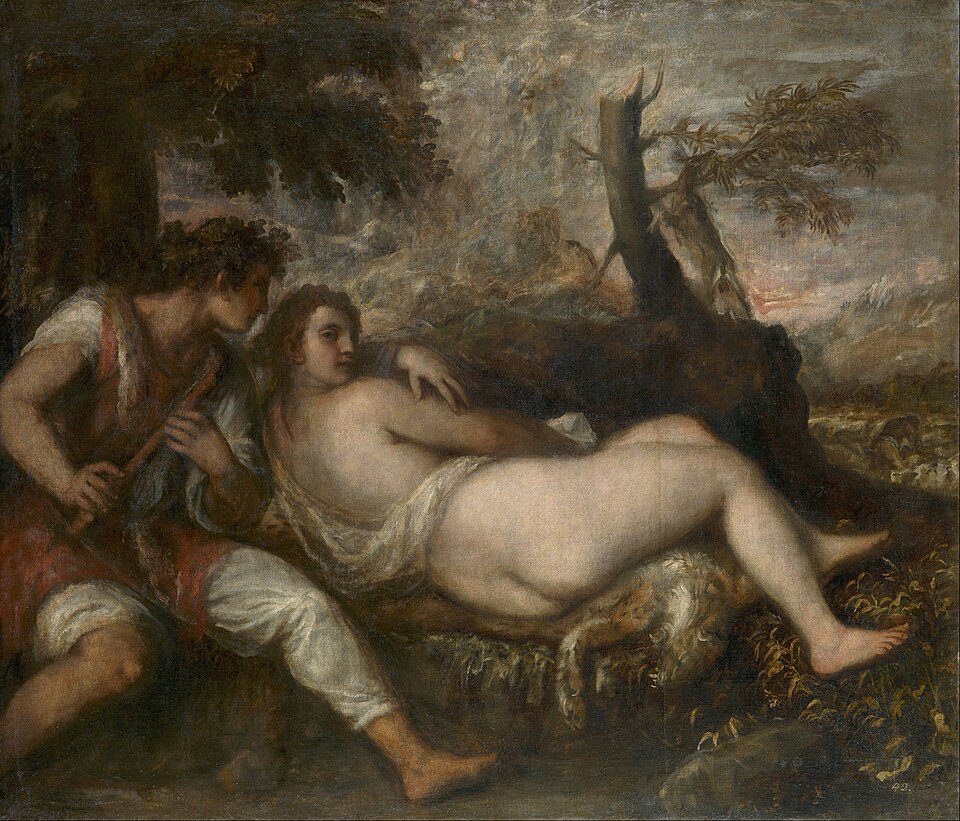
We must learn to forgive the offense of pretending to know and thereby learn “to leave something outside of being, to render it unsavable”, just as “as Titian’s lovers forgive each other for their own lack of mystery.”
Source: Autonomies
 ReveilLibertaire